I am a visiting student at MIT, advised by Tomaso Poggio, working on multi-agent systems, knowledge distillation through reinforcement learning, and LLM routing.
I’m interested in how agents reason, collaborate, and learn from imperfect feedback. I explore verification of open-ended tasks and rewards that improve behavior. I’m also curious about what helps learned representations generalize to new tasks.
Before MIT, I worked on foundation models, including pre-training and post-training, with Jonathan Dan in Logitech’s CTO Office. At Idiap Research Institute, I researched bio-inspired text-to-speech and spiking neural networks under the supervision of Philip N. Garner.
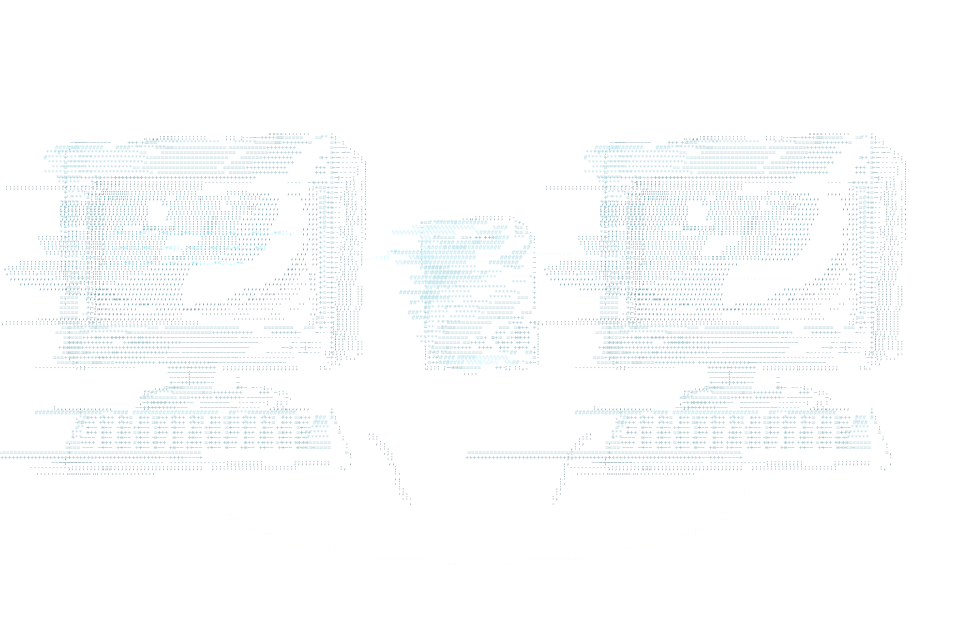
Two substantial ASCII computer terminals represent a student and a frozen teacher. A response moves toward the teacher, which computes self-attribution probability and sends that value back as a learning reward. No reference answers are generated.
Submitted to ICLR 2027MIT, 2026
Uncovering the Turing Test's Latent Signal: Indistinguishability as a Reward
Emanuele Rimoldi, Riccardo Neumarker, Tomaso Poggio, Daniel Mitropolsky
A student model learns from the probability that a frozen teacher attributes the student’s response to itself. This indistinguishability reward supports reinforcement learning without ground-truth answers or teacher-generated reference responses; independent, held-out verifiers assess capability gains across four domains.
Why do routers built on semantic embeddings struggle on unseen tasks? We study their geometry and use deep hidden-state representations to improve how lightweight classifiers choose between language models.
Illustration from Andrej Karpathy’s autoresearch repository: https://github.com/karpathy/autoresearch/blob/master/progress.png. The preview shows the original running-best curve and plotted points, traced into a larger monochrome vector rendering without axes, grid or text. Open the image for the original full-resolution figure.
Accepted · ICML 2026 AI for Science WorkshopMIT, 2026
A framework for understanding what automated research systems contribute, which scholarly artifacts they produce, and how their claims can be checked. The central question is how to match a system’s autonomy to the strength of its verification.
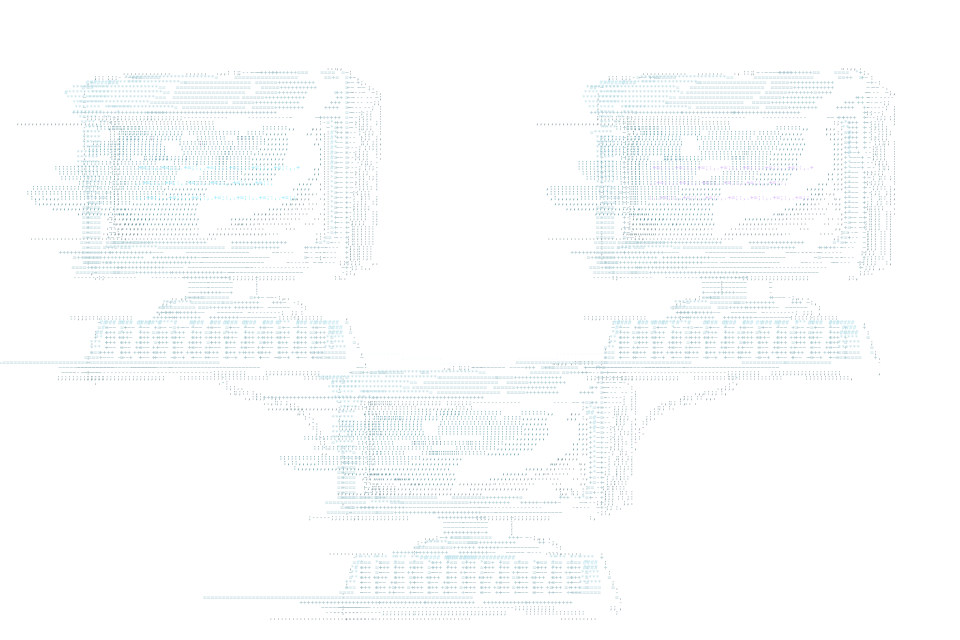
Two matching physical ASCII terminals represent imitator A and a fresh B. A balanced selector exposes one anonymous source to the lower terminal, the distinguisher B. Signals travel in both directions before B makes its source guess.
We extend the imitation game to arbitrary interactive agents. Pairwise imitation and discrimination provide an adaptive way to compare capabilities, with theoretical guarantees and experiments across nine language models.
Projects
Image reference supplied by the owner: https://www.pinterest.com/pin/22095854416157252/
MIT · Cambridge, MA, USA · 2026
RealDoor
An AI-assisted workspace that helps applicants assemble affordable-housing applications. It organizes documents, extracts information with supporting evidence, explains program requirements, and prepares a packet for human review.
Emanuele Rimoldi, Paolo Giaretta, Riccardo Neumarker, Massimo Perfetti
Image reference supplied by the owner: https://www.pinterest.com/pin/411446115939092963/
EPFL · Lausanne, Switzerland · 2025
The Reddit Brain
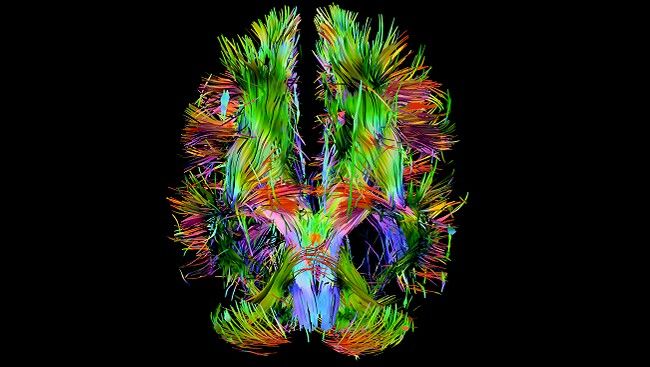
An interactive, brain-inspired map of Reddit’s social dynamics. It explores how subreddit networks connect, co-activate, carry sentiment, and reorganize after disruption through network science, NLP, and data visualization.